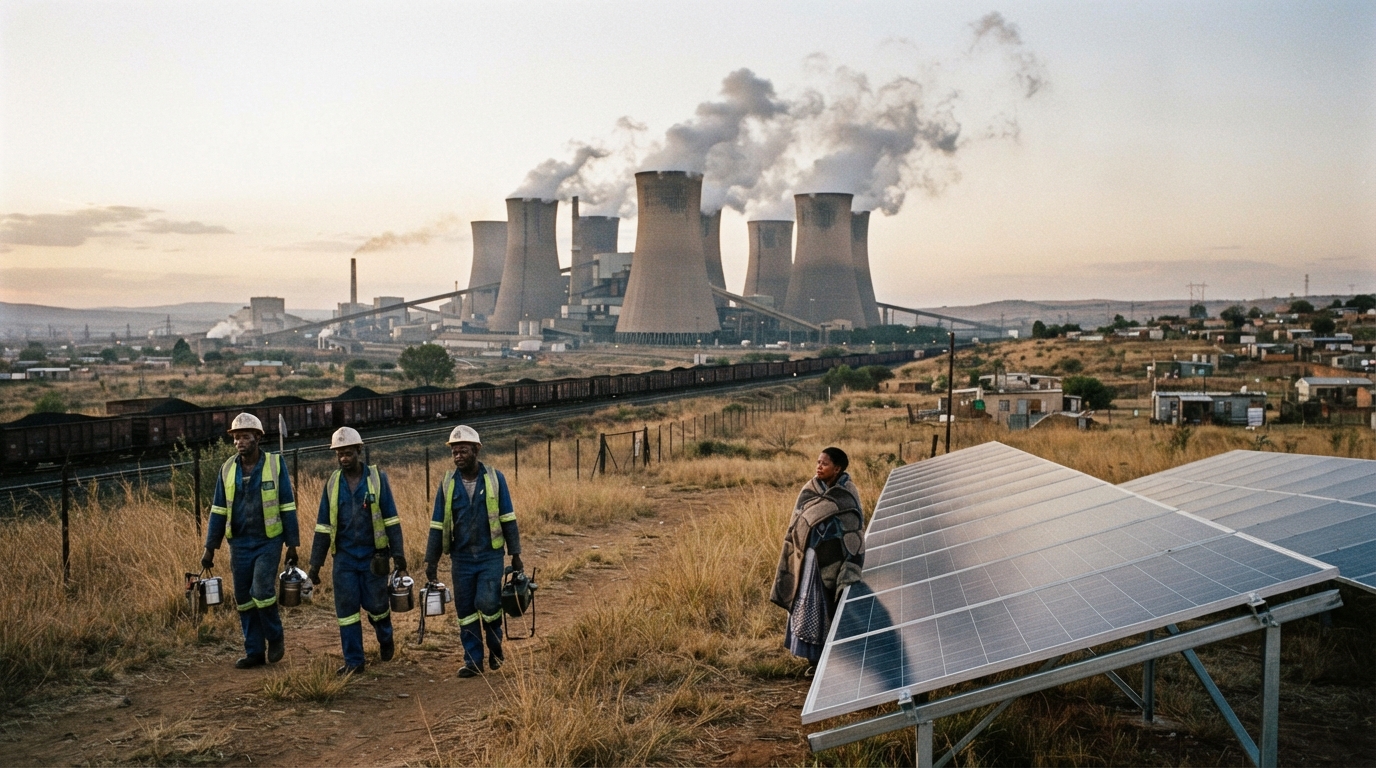
South Africa faces a critical test as coal communities demand concrete green jobs before plant closures. Explore the challenges and solutions for a just energy transition in SA.
The global drive towards a 'just transition' away from fossil fuels, intended to safeguard livelihoods in coal-dependent regions, is encountering significant political headwinds across Africa. South Africa, with its deep reliance on coal for power generation and employment, finds itself at the epicentre of this complex challenge, where promises of green jobs must materialise swiftly to prevent widespread social and economic disruption. The pushback highlights a critical disconnect between high-level climate agreements and the on-the-ground economic realities faced by millions.
Promises and Peril: The Global Landscape
International climate finance and ambitious pacts aim to accelerate the decommissioning of coal-fired power stations. However, communities and powerful labour unions in regions traditionally powered by coal are voicing growing dissent. Their core demand is clear: concrete, sustainable green job opportunities must be a reality
before the gates of existing coal mines and power plants close. This resistance tests the fundamental premise of a just transition, underscoring the urgency of detailed, actionable plans for economic diversification.
Charting a Just Path for South Africa
South Africa's energy future is inextricably linked to navigating this transition successfully. With Eskom's aging coal fleet still supplying the bulk of the nation's electricity and supporting vast communities in Mpumalanga, the stakes are exceptionally high. The country has received substantial international commitments for its Just Energy Transition Partnership (JETP), yet the practical implementation of these funds remains a key concern. Without tangible investments in renewable energy projects, grid infrastructure, and vocational training that directly absorb displaced coal workers, resistance will inevitably intensify. The constructive approach demands data-backed strategies for skills development, identifying regional renewable energy hubs, and fostering local economic diversification that goes beyond mere rhetoric.
The South Africa Angle
For Green Grid South Africa, the 'just' component of the transition is paramount. It means ensuring Mpumalanga, the heartland of South Africa's coal industry, is not left behind. This isn't just about closing power stations; it's about building new industries, new skills, and new opportunities – from solar panel manufacturing and wind farm maintenance to battery storage solutions. It requires proactive engagement with unions, local government, and communities, presenting clear roadmaps for job creation linked directly to renewable energy expansion and the broader green economy. The vast potential of solar and wind in South Africa offers a genuine pathway to new, sustainable employment, but only if these opportunities are actively cultivated and accessible to those most affected by coal's decline. The pushback from coal-dependent regions serves as a critical warning. For South Africa to secure its energy future and avoid exacerbating existing socio-economic inequalities, the just transition cannot remain an abstract concept. It must translate into immediate, measurable progress on the ground, delivering concrete economic alternatives for communities facing profound change.
Source: BBC Business